

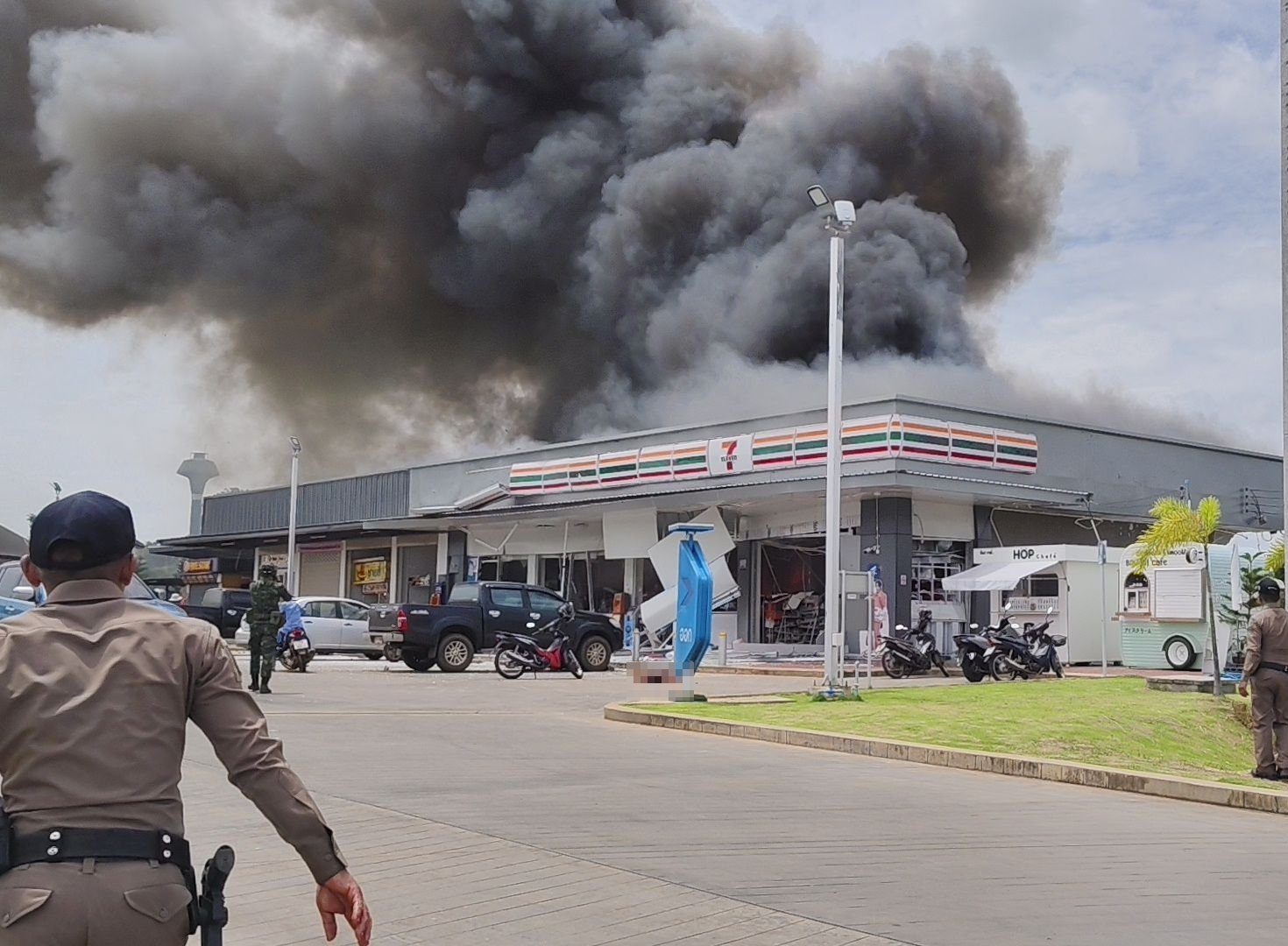
In what has become the most dangerous Thailand-Cambodia border clash in over a decade, heavy fighting erupted on Thursday, July 24, near the disputed Prasat Ta Muen Thom temple complex. The fierce military confrontation has led to the deaths of at least 12 people on the Thai side, wounded dozens more, and forced over 5,000 Cambodian civilians and thousands of Thai residents to evacuate as artillery shells, airstrikes, and drones devastated the contested frontier.
Drone Surveillance, Rocket Fire, and Airstrikes
The Thailand-Cambodia border clash began with Cambodian forces reportedly launching surveillance drones over Thai territory to monitor troop positions. Shortly after, Cambodian units fired rocket-propelled grenades and BM-21 Grad rockets, targeting infrastructure in Surin and three other Thai provinces. Thai authorities accused Cambodia of intentionally striking civilian locations including homes, hospitals, and a fuel station.
In retaliation, the Royal Thai Air Force deployed F-16 fighter jets to conduct airstrikes on Cambodian military targets, marking a dangerous escalation. Thai National Security Council officials described Cambodia’s actions as “unprovoked and aggressive,” while the Cambodian government insisted its response was defensive.
Phnom Penh claims Thai forces violated a longstanding military understanding by surrounding the Prasat Ta Muen Thom site with barbed wire before opening fire. Cambodian Prime Minister Hun Manet called the move “an act of invasion” and said Cambodia was compelled to act in defense of its territorial sovereignty.
Watch the footage: Cambodia launches BM-21 Grad rocket system
Civilian Casualties and Emergency Evacuations
At least 11 civilians and one Thai soldier have died in the Thailand-Cambodia border conflict, with over 30 others injured. While Cambodia has not released an official death toll, reports from the ground suggest mounting casualties on both sides.
Evacuation efforts are underway:
- Thailand has evacuated thousands from Surin Province and adjacent areas.
- Cambodia has relocated over 5,000 civilians from its border provinces amid fear of further escalation.
Local officials in both countries have set up emergency shelters and medical facilities, anticipating a protracted stand-off.
Why the Thailand-Cambodia Border Clash Matters
The current Thailand-Cambodia border clash is not a new conflict but a deep-rooted territorial dispute dating back over a century. The colonial-era border demarcations left by French administrators in the early 1900s failed to clearly define the ownership of several ancient temple sites scattered across the Thai-Cambodian frontier.
The key points of contention have been:
- Preah Vihear Temple, ruled in Cambodia’s favor by the International Court of Justice in 1962.
- Prasat Ta Muen Thom, a Khmer-Hindu temple complex now at the center of renewed violence.
The tensions reignited in 2008 when Cambodia registered Preah Vihear as a UNESCO World Heritage Site, provoking nationalist outrage in Thailand. The 2011 border clashes claimed 15 lives and displaced thousands — a grim precedent now repeated in 2025.
Political Vacuum and Military Tensions
This latest clash comes amid a leadership crisis in Thailand. Prime Minister Paetongtarn Shinawatra was suspended earlier this month over allegations of electoral impropriety. Acting Prime Minister Phumtham Wechayachai now leads a caretaker government facing mounting nationalist pressure and widespread public anxiety over border security.
Cambodian officials have expressed concerns that Thailand’s internal instability is being projected outward in the form of military aggression. Cambodia has demanded international mediation and accused Thailand of exploiting the situation to assert expansionist claims.
What’s Next for Southeast Asia?
With both militaries reinforcing their positions along the border, and regional powers watching closely, the situation remains dangerously volatile. The Thailand-Cambodia border clash has the potential to not only destabilize bilateral relations but also weaken ASEAN’s efforts at regional peacebuilding.
As displaced families seek refuge and the Southeast Asian neighbours dig in, the risk of further escalation looms large.
