
Thirty-seven years ago, on a quiet November morning in 1988, India demonstrated its capabilities as the region’s first responder.
The operation, codenamed Operation Cactus, remains one of the most decisive and swift military interventions in India’s history. It reaffirmed India’s commitment to regional stability and underscored its capability to project power far beyond its shores.
Operation Cactus was India’s 1988 military intervention in the Maldives to foil a coup against President Maumoon Abdul Gayoom.
The Coup Attempt in Maldives
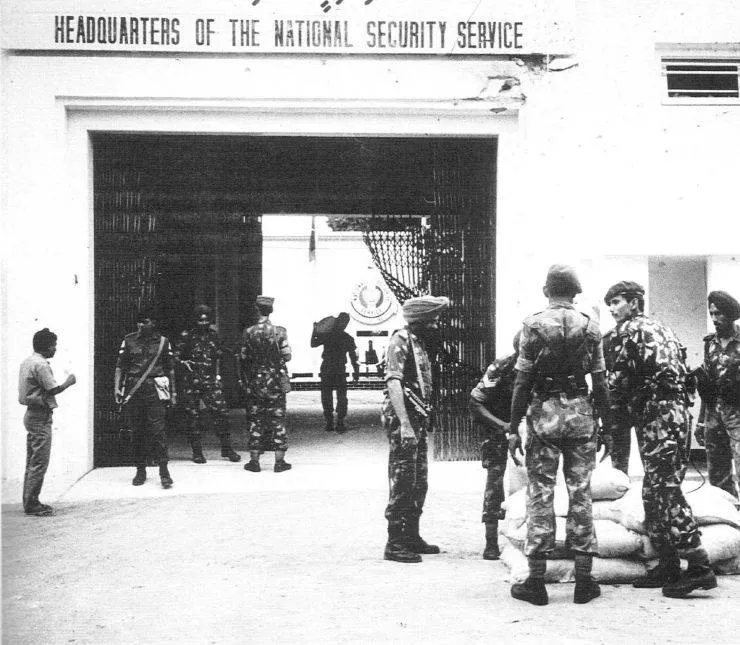
On November 3, 1988, the island nation of Maldives was plunged into chaos. Armed Tamil mercenaries belonging to the People’s Liberation Organisation of Tamil Eelam (PLOTE), backed by a disgruntled Maldivian businessman, Abdullah Luthufi, stormed the capital city, Malé. Their objective was clear — overthrow the democratically elected President Maumoon Abdul Gayoom and install a puppet regime sympathetic to their interests.
As gunfire erupted across the capital, President Gayoom found refuge in a safe house and reached out for help. Desperate calls went out to the United States, the United Kingdom, and Pakistan, but only one nation had both the will and the capability to respond immediately — India.
At 6:30 a.m., an urgent message reached New Delhi — one that, in essence, meant:
Malé is under attack. We need help immediately.

Operation Cactus Triggered
That morning, General V.N. Sharma, then Chief of Army Staff, was preparing to leave Army House for his South Block office when he received an urgent call from Ronen Sen, a foreign service officer at the Prime Minister’s Office (PMO). Sen informed him that the Maldivian capital, Malé, had been taken over by around 100–200 Sri Lankan mercenaries, with President Maumoon Abdul Gayoom in hiding and several ministers held hostage. The situation was deteriorating rapidly, and the Maldivian government had sent an SOS to New Delhi seeking immediate military assistance.
General Sharma assured the PMO that the Army would take charge and initiate action without delay. With that exchange, the course of one of India’s most remarkable military operations abroad was set in motion — an unprecedented mission that brought together the Army, Navy, and Air Force for a coordinated overseas rescue operation.
Why Gayoom Faced the Coup Attempt
President Maumoon Abdul Gayoom, who had been at the helm since 1978, had already survived two coup attempts in 1980 and 1983. By 1988, discontent brewed again, fuelled by economic challenges and political rivalries. This time, businessman Abdullah Luthufi and Ahmed Nasir conspired to overthrow Gayoom’s government.
They hired nearly 100 PLOTE mercenaries, who landed before dawn on November 3, using hijacked Sri Lankan freighters and speedboats. Within hours, they captured major government buildings, the airport, and radio and TV stations. Yet, in a tactical oversight, they failed to disable the telephone exchange and the airport, allowing Gayoom to establish contact with the outside world — and eventually, with India.
India’s Swift Response
When the distress call reached India, Prime Minister Rajiv Gandhi was returning from Kolkata. By the time he landed, his Cabinet Committee for Political Affairs had already convened, attended by the three Service Chiefs.
General V.N. Sharma and his Vice Chief, Lt. General Rodrigues, coordinated with the Director General of Military Operations (DGMO) to alert the Air Force and Navy. The 50th Independent Parachute Brigade at Agra was placed on two hours’ notice to move. Naval reconnaissance aircraft were simultaneously deployed over the Maldives to assess conditions on the ground.
At this stage, India had almost no intelligence, no detailed maps, and no prior reconnaissance of the terrain — only determination and urgency. That’s when a stroke of luck arrived: Arun Banerjee, India’s High Commissioner to the Maldives, happened to be in New Delhi at the time. He rushed to the operations room with maps of Malé and Hulhule, providing critical situational inputs that shaped the mission plan.
What followed was one of the fastest mobilizations in India’s post-independence military history, highlighting the country’s emerging role in Indian Ocean security.
By noon, New Delhi had approved full military intervention. The Indian response was fast, deliberate, and precise.
Operation Cactus Takes Flight
Orders were given to deploy the 6th Battalion of the Parachute Regiment (6 PARA) and elements of the 17th Parachute Field Regiment, under the leadership of Brigadier Farouk Bulsara.
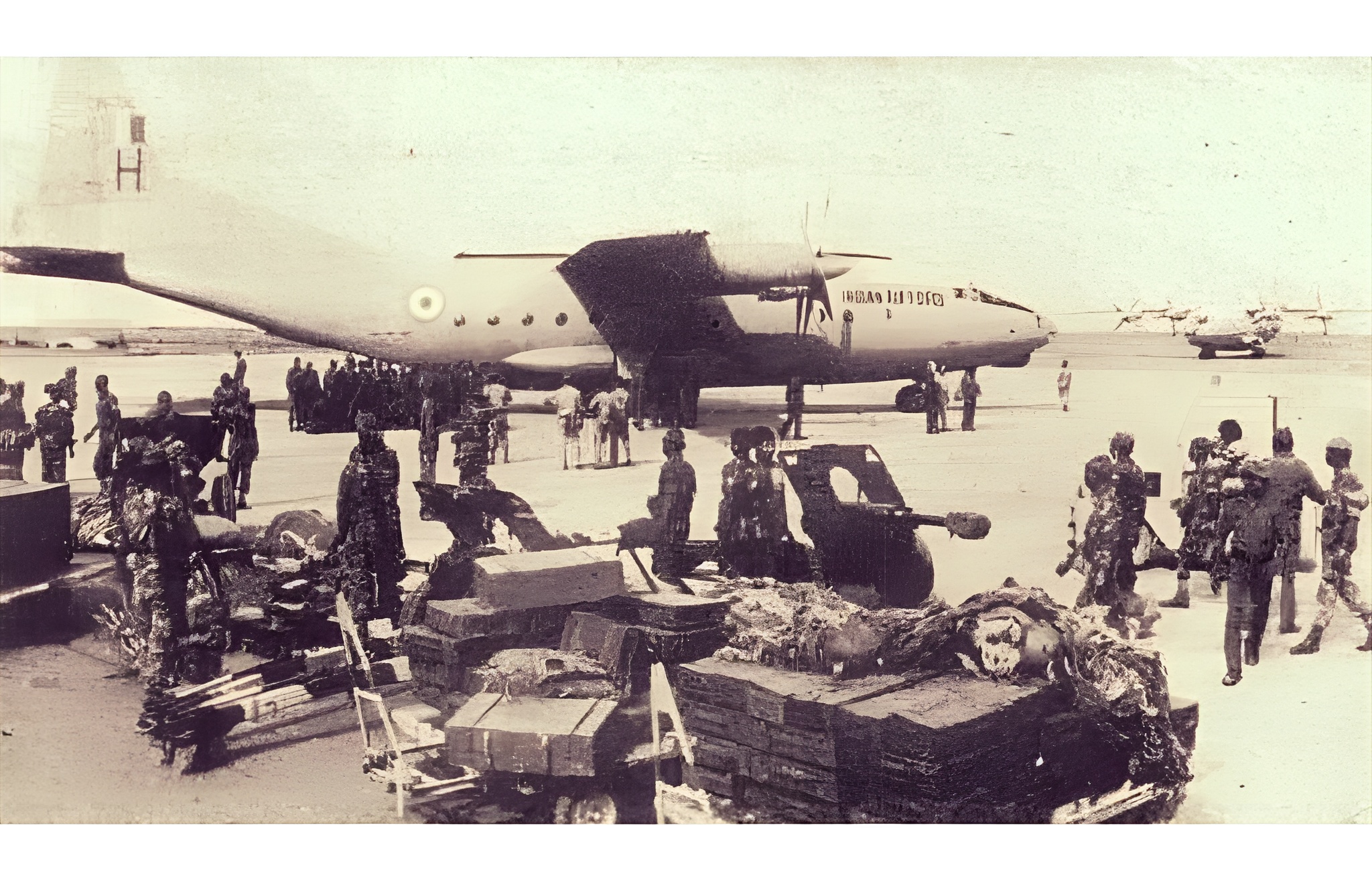
By the evening of November 3, two newly acquired IL-76 transport aircraft from the IAF’s 44 Squadron took off from Agra, maintaining strict radio silence. Their destination: Hulhule Airport, the gateway to Malé. The first aircraft, piloted by Group Captain Anant Bewoor, landed at 10:30 p.m. — on an unlit, uncertain runway.
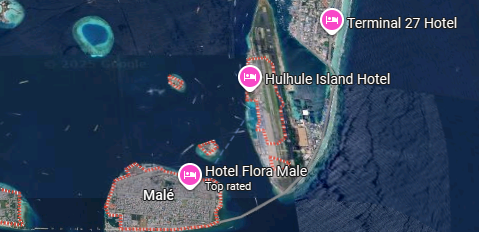
Within hours, Indian Army para commandos secured the airport and moved toward Malé using commandeered boats. By 4 a.m. on November 4, the coup had collapsed. President Gayoom was rescued unharmed, and the mercenaries were cornered.
It was a flawless rapid military response — executed in real time, thousands of kilometres away from India’s shores.
The Indian Navy’s Pursuit
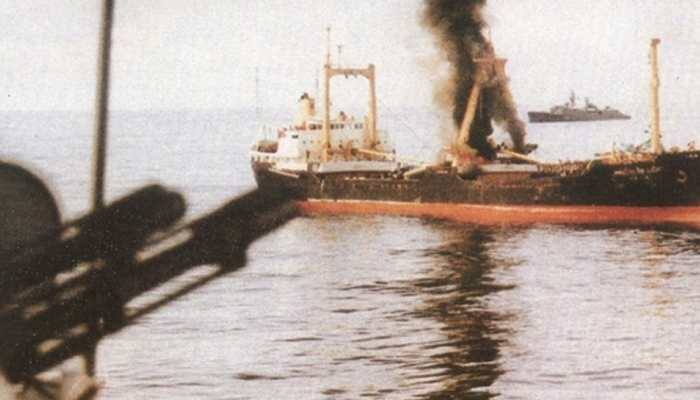
Even as order was restored in Malé, intelligence revealed that Luthufi and the remaining mercenaries had hijacked a merchant vessel, MV Progress Light, taking 27 hostages — including Maldivian Transport Minister Ahmed Mujutuba and his Swiss wife, Ursula — and attempted to flee toward Sri Lanka.
The Indian Navy immediately launched a pursuit. INS Godavari and INS Betwa intercepted the vessel in international waters. When confronted, the mercenaries executed two hostages in cold blood, throwing their bodies into the sea to deter the approaching warships.
But the Indian Navy pressed on. After a tense standoff, the rebels surrendered and were taken aboard INS Godavari, ending the crisis without a single Indian casualty.
A Defining Moment for India’s Regional Power Status
Operation Cactus was not just a military success — it was a strategic assertion.
India had demonstrated, unequivocally, that it possessed the political will, operational capability, and moral responsibility to act as the security guarantor of South Asia.
Then U.S. President Ronald Reagan hailed India’s action as a “stabilizing influence in the Indian Ocean.” Across the world, India’s ability to plan and execute a cross-sea intervention within 16 hours of an SOS earned widespread respect.
This also marked a turning point in how India’s role in the Indian Ocean was perceived globally — from a passive regional actor to an active first responder and stabilizing power.
India–Maldives Relationship
In the aftermath, President Gayoom personally thanked Rajiv Gandhi and requested that a contingent of Indian paratroopers stay back to help reorganize and train the Maldivian security forces. The troops remained for nearly a year — marking the start of a long-standing India–Maldives defence partnership.
Over time, India became the Maldives’ principal security partner, assisting in maritime surveillance, disaster response, and training. The relationship has weathered political fluctuations, including periods of Malé’s tilt toward China — especially under former President Abdulla Yameen, who invited massive Chinese investments like the China–Maldives Friendship Bridge.
As geopolitical rivalries deepen in the Indian Ocean Region, and China’s presence expands across the maritime sphere, the lessons of that night in November 1988 remain more relevant than ever.
Operation Cactus was a masterclass in coordination, speed, and leadership — proving that a decisive Cold War–era Indian intervention could reshape the regional balance of power.
Speed, coordination, and resolve can change the course of history — and define a nation’s role in its region.
